

Okay, so check this out—I’ve been living in browser wallets for years. Whoa, that surprised me! My instinct said these tools would stay clunky, but things shifted fast. Initially I thought browser extensions were just conveniences, not game‑changers, but then I realized they often sit at the center of how I manage assets and interact with protocols. This piece is about what worked, what pissed me off, and how a thoughtful multi‑chain extension wallet can save you time and headaches.
Seriously? Yes. Small things make big differences. A wallet that supports many chains means fewer accounts to juggle and fewer places to check for balances. On one hand that sounds obvious, though actually there’s nuance—multi‑chain support can introduce UI clutter or security tradeoffs if not designed well. My experience with a few wallets taught me to value a clean UX above flashy extras.
Whoa, here’s a quick gut reaction: security matters more than bells. Hmm… that sounds preachy, but bear with me. I once imported five different seed phrases into three different extensions (don’t recommend this test, by the way), and something felt off about the way approvals piled up. After that mess I built a checklist: hardware wallet compatibility, per‑site connected addresses, and clear permission auditing. That checklist saved me more than once.
Here’s the thing. A smart browser extension should put permission control front and center. Short prompts are fine, but you need a history you can review. Actually, wait—let me rephrase that: you need both short prompts and a clear, inspectable history, because instant decisions later become forensic puzzles. When approvals are logged with timestamps and contract details, you can spot oddities quickly and react.
What to look for in a DeFi browser extension
Simple list? Nah, that’s too neat. I’ll rattle off the essentials and explain why they matter. Whoa, quick hit: UX that anticipates mistakes reduces costly errors. Medium‑length explanation: good UX reduces approval fatigue and helps prevent approvals to malicious contracts. Longer thought: a thoughtfully designed wallet uses modal confirmations, default safety caps, and explicit gas estimation notes, which combined lower the chance of an accidental unlimited approval or a bad swap during network congestion.
One practical example is how wallets handle contract approvals. Really? Yep. Some wallets bury unlimited-approval toggles deep in settings, which is bad. Others surface a “revoke” flow and make it easy to limit allowances to single-use. My instinct said revoke flows would be niche, but they became one of my most-used features after a couple close calls. I’m biased, but that feature alone changes my trust calculus.
Okay, so check this out—connectivity across chains matters too. If you hop between Ethereum, BSC, and Layer 2s, you want consistent address behavior and predictable network switching. On one hand automatic switching saves clicks, though on the other hand it can confuse users when a site expects a specific chain. Dealing with that tension is a design problem more than a technical one.
Security mechanics are crucial. Hmm… hardware wallet support is non‑negotiable for power users. Medium point: integration with Ledger/Trezor through the extension reduces attack surface by keeping keys offline. Longer thought: when a browser extension provides a seamless, verifiable path to confirm transactions with a hardware device, it effectively combines the convenience of quick interactions with the safety of cold key storage, which is what many institutions and serious users need.
I’ll be honest—some wallets feel like they were built by engineers who forgot about people. That bugs me. Short: small usability fixes go a long way. Medium: labeling tokens clearly, showing fiat values, and highlighting the active address reduce cognitive load. Long: when token metadata is inconsistent, or when token lists are overloaded with spam tokens, users make mistakes that cost money, so thoughtful token management and default filters are essential design choices.
Why I recommend trying rabby
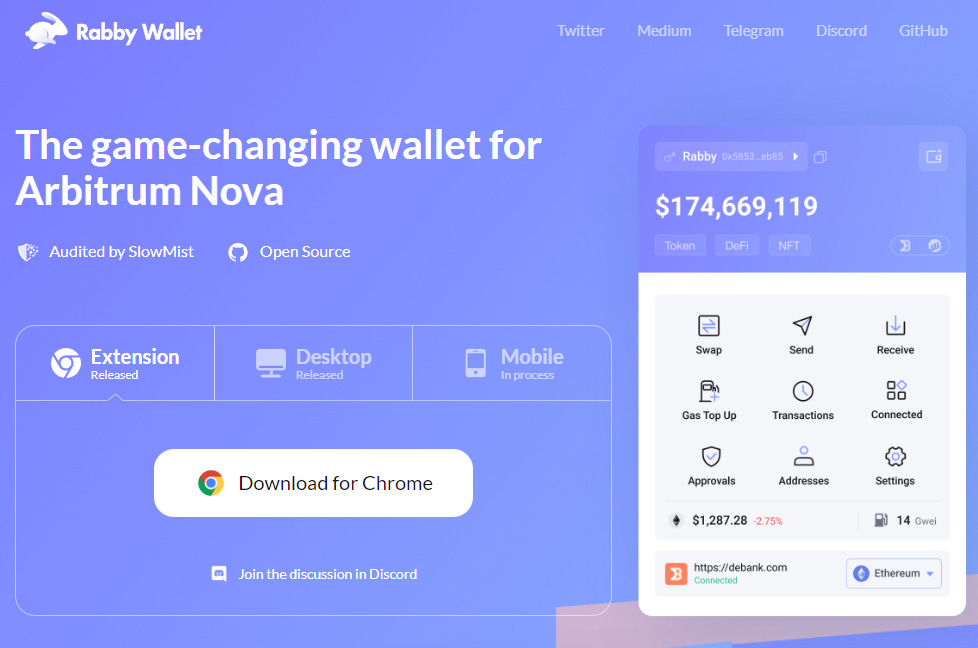
I’m not paid to say this—I tried a number of extensions and landed on a few I kept coming back to. Whoa, seriously? Yes. My actual usage patterns made one choice stand out. rabby has sensible multi‑chain handling, clear permission UX, and decent hardware support, and it made daily DeFi tasks less error‑prone for me. I’m biased, but having one place where approvals, network switching, and account management are coherent saved me time and stress.
Check it out: rabby brings sensible defaults, per‑site address mapping, and an approval history that reads like a transaction diary. Medium thought: that diary helps you trace approvals back to specific dApps, which is invaluable when an unexpected token shows up or when you need to revoke allowances. Longer thought: because Rabby separates the concept of connected sites from active approvals and gives users transparency about which address is being used where, it becomes easier to compartmentalize risk across different DeFi strategies.
Something felt off early on with many wallets: they present a polished front but hide critical details. That’s a design smell. Short aside: somethin’ about that bugs me. Medium explanation: clarity about transaction origin, nonce, and gas estimation prevents a lot of confusion. Longer thought: convincing users to pay for accuracy (for example, by displaying precise gas estimates and offering retry strategies) fosters better decision‑making during volatile periods, which is when mistakes happen most.
On the topic of multi‑chain liquidity, here’s an observation: bridging and cross‑chain swaps still feel risky. Hmm… bridges are improving, though often they are the weakest link. Medium point: the best wallet behavior is to show bridge risks, expected delays, and potential token wrapping implications. Long thought: users who understand these tradeoffs will choose routes differently, and wallets that contextualize those choices help reduce loss and confusion.
I’m not 100% sure about every future trend, but two things feel likely: first, wallet UX will converge toward explicit risk signals and richer permission controls; second, deep integrations between browser extensions and hardware wallets will become the norm. Short confession: I like predictability. Medium nuance: improvements will be incremental, not revolutionary. Long insight: incremental but well-crafted UX changes compound over time, and the users who value security and clarity will gravitate toward wallets that deliver those small wins consistently.
Common questions
Is a browser extension wallet safe for large holdings?
Short answer: generally no, not by itself. Use a hardware wallet for large sums. Medium detail: extensions are convenient and can be secured with strong passwords and careful approval hygiene, but they still run within the browser environment which expands attack surface. Longer guidance: combine hardware wallet usage with a trusted extension that supports external signing, keep software updated, and limit on‑chain approvals; treat the extension as a hot wallet for active trading, and a cold solution for long‑term storage.
Can one extension handle all my networks?
Yes, if it’s designed well. Short note: multi‑chain support is mature now. Medium explanation: look for consistent UX across chains, clear network indicators, and robust RPC fallback options. Long caveat: some niche chains require manual configuration, and token metadata can vary, so expect occasional friction.
