

What if the most expensive gas mistake is not choosing the wrong fee, but approving the wrong transaction? DeFi users often treat gas optimization as a race to find the smallest number in a fee field. That is an incomplete model. The final cost depends on network demand, transaction complexity, execution conditions, the probability of failure, and the economic value of the action itself. A cheap transaction that reverts, triggers an unintended approval, or requires a second corrective transaction may be more expensive than a cautious transaction submitted during a less congested period.
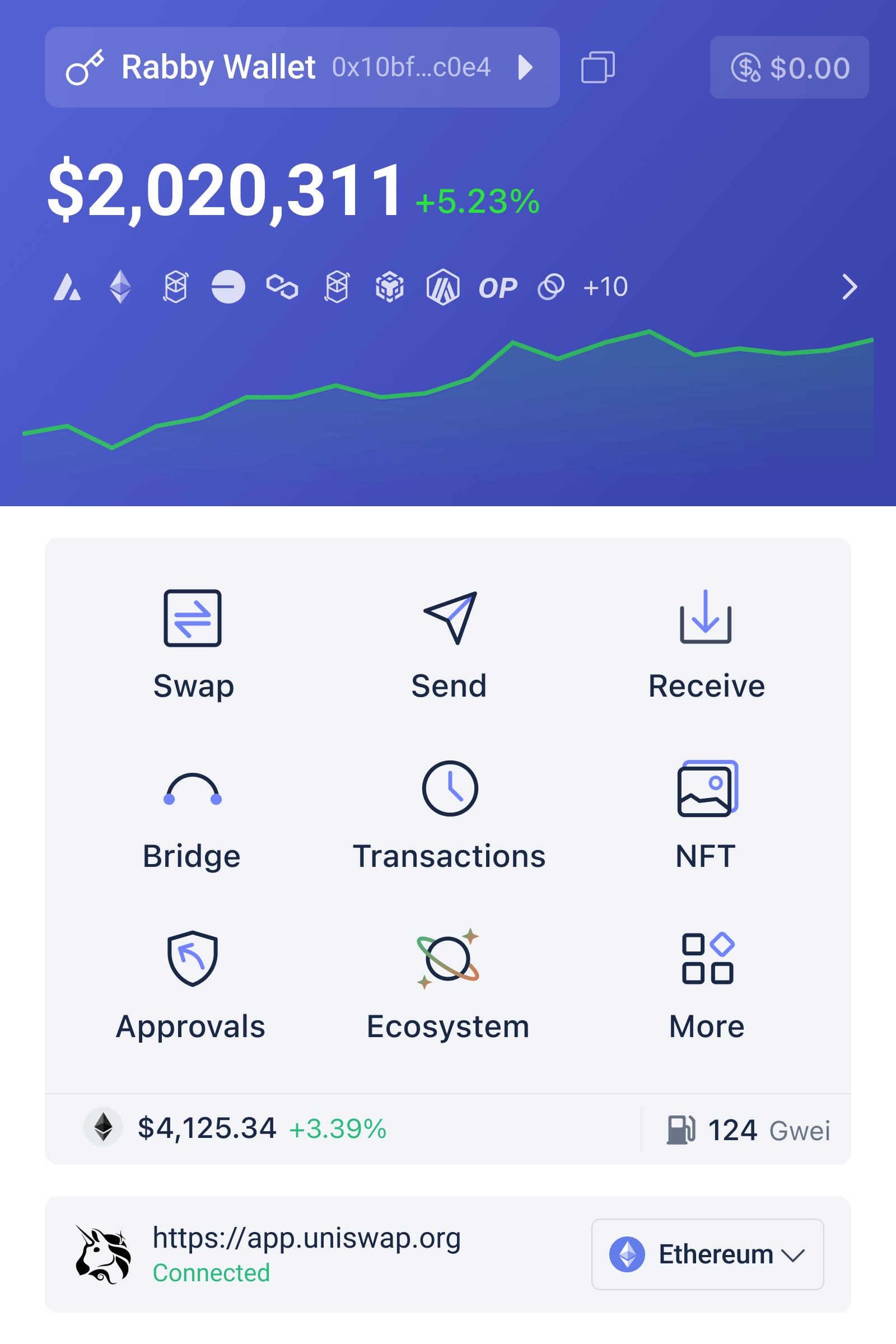
For US users moving between decentralized exchanges, lending markets, bridges, and liquid staking protocols, a browser wallet is therefore more than a signing tool. It is an interpretation layer between a human decision and smart-contract code. A Rabby wallet extension can help organize that decision by presenting transaction details, network context, and potential warnings before a signature is authorized. It does not eliminate blockchain risk or guarantee the lowest possible fee. Its value is better understood as reducing avoidable uncertainty.
Myth One: Gas optimization means always selecting the lowest fee
On Ethereum and similar networks, users generally pay for two different components: the amount of computational work a transaction consumes and the price paid for each unit of that work. The first is commonly described through gas used; the second reflects network conditions and the transaction’s fee settings. A simple transfer usually consumes less computation than a token swap, while a multi-step contract interaction may consume substantially more. Reducing the fee price cannot change the computational complexity of the contract call.
This distinction matters because a transaction with an unusually low fee may wait longer, become less competitive during a demand spike, or fail to execute within the conditions expected by the user. Under Ethereum’s fee model, the base fee is determined by network activity and is burned, while an additional priority fee can influence how validators treat a transaction. The exact mechanics vary across networks and wallet interfaces, but the general principle is durable: timing and execution probability matter alongside the displayed gas estimate.
A more useful objective is not “pay the minimum.” It is “minimize expected total cost.” That total can include the initial fee, the cost of a failed transaction, the opportunity cost of delayed execution, slippage in a swap, and the loss associated with an unsafe approval or malicious contract interaction. This is an expected-value framework rather than a promise of savings. It recognizes that the cheapest immediate action is not always the cheapest complete outcome.
Myth Two: The wallet controls the network’s gas price
A wallet can estimate fees, construct a transaction, and allow the user to adjust available parameters. It cannot command validators, manufacture block space, or override a congested network. Gas prices emerge from competition for limited execution capacity. When a major market move, token launch, liquidation wave, or popular mint increases demand, all users may face higher prices at once.
This boundary is important when evaluating a Rabby wallet extension or any other browser wallet. Wallet-level guidance may improve visibility, but it cannot make a complex transaction intrinsically cheap. The user still needs to ask whether the action is urgent, whether the protocol is reliable, and whether the expected benefit justifies the fee. A wallet may show an estimate that is reasonable at one moment and stale several seconds later if market conditions change quickly.
For that reason, gas optimization often begins before the wallet opens. A user can consolidate several planned actions when a protocol supports safe batching, avoid unnecessary on-chain activity, and choose a suitable network when the application and assets genuinely support one. The trade-off is that batching can increase transaction complexity and may create a larger single point of failure. Moving to a cheaper network can reduce fees but introduce bridge risk, thinner liquidity, different security assumptions, or a less familiar contract environment.
Myth Three: A successful transaction is automatically a safe transaction
Success on-chain means that the network accepted and executed the transaction according to the contract’s rules. It does not mean the user understood those rules, received a fair exchange rate, or interacted with the intended contract. This is one of the most consequential misconceptions in DeFi. A transaction can be technically successful while producing an economically harmful result.
Consider a token swap. The gas fee may be perfectly reasonable, yet the user may receive less than expected because of slippage, thin liquidity, or an adverse price movement. In another case, an approval transaction may cost little, but grant a contract permission to spend more tokens than the user intended. Gas optimization that ignores permissions and economic outcomes is not optimization; it is narrow accounting.
Transaction simulation and risk alerts can provide useful context before signing. They may help a user inspect balance changes, contract interactions, or suspicious conditions. However, simulations are not omniscient. They depend on the current state used for the simulation, may not capture every future market movement, and cannot turn an unknown or poorly governed protocol into a safe one. Treat warnings as decision support, not as an insurance policy.
Users seeking to install the extension should begin from a source they can verify and compare the wallet’s publisher, permissions, and requested access with what is expected. A practical starting point for the rabby extension download is to verify that the page leads to the intended official distribution channel before installing anything. This matters because a counterfeit extension can imitate familiar branding while redirecting signatures or exposing sensitive information. The seed phrase should never be entered into a browser extension merely to “activate” a wallet.
Myth Four: Failed transactions are harmless because the action did not happen
A reverted transaction usually means the intended state change did not complete, but the network still processed the transaction attempt and consumed computational resources. The fee may therefore be charged even when the swap, deposit, or withdrawal fails. Repeated failures are especially costly when they result from an unchanged condition: an expired deadline, insufficient token balance, inadequate allowance, or a slippage limit that does not match current liquidity.
The deeper lesson is that gas efficiency depends partly on diagnosis. Before resubmitting, the user should identify why the transaction failed. Increasing the fee may help a transaction be included sooner, but it will not fix an invalid parameter or a contract-level requirement. Similarly, raising slippage may reduce failed swaps while increasing the amount of price movement the user is willing to tolerate. That is a classic trade-off, not a free optimization.
Wallet previews can make some of these conditions easier to inspect, but the final responsibility remains with the signer. DeFi interfaces vary in quality, and a clear preview cannot compensate for a protocol with flawed economic design. For larger positions, a small test transaction may reduce uncertainty, although it adds an extra fee and cannot prove that every later step will be safe.
A practical gas framework for DeFi users
A reusable decision process can be more valuable than memorizing a particular fee setting. First, classify the action. Is it a simple transfer, an approval, a swap, a liquidity operation, a lending transaction, or a cross-chain movement? More complex actions usually deserve closer review because they combine more contract calls and more possible failure points.
Second, separate urgency from convenience. A liquidation defense or time-sensitive arbitrage has a different fee logic from a routine portfolio rebalance. If the action is not urgent, waiting for lower demand may be sensible, but the user should recognize that the market can move while waiting. The correct choice depends on the value at risk, not merely on whether the fee feels high.
Third, inspect the transaction’s expected effects. Review the asset being spent, the asset being received, the recipient, the network, the allowance, and any warnings. Compare the expected value of the outcome with the fee and with plausible slippage. This is particularly important in the United States, where users may also need to maintain records of swaps, sales, and transfers for tax reporting. A wallet is not tax advice, but clearer transaction history can make later reconciliation less difficult.
Fourth, use operational safeguards. Keep separate accounts for experimentation and long-term holdings when practical. Revoke or reduce unnecessary approvals according to the user’s risk tolerance, remembering that revocation itself costs gas. Confirm that the browser extension is installed from a trustworthy source, keep the seed phrase offline, and be cautious with unsolicited links, direct messages, and pop-ups requesting urgent action.
What to watch as networks evolve
Gas optimization will likely become more application-specific as scaling systems, rollups, and alternative execution environments mature. Lower fees may make frequent interactions economically viable, but lower price does not automatically imply equivalent security, liquidity, or settlement properties. The relevant comparison may shift from “Which network is cheapest?” to “Which execution environment offers an acceptable combination of cost, finality, liquidity, application support, and trust assumptions for this action?”
Wallets may become more useful as interpreters of this increasingly fragmented environment. Conditional on better data and reliable simulations, they could help users compare execution paths rather than simply display a fee estimate. Yet the unresolved issue is verification: users still need confidence that a warning system is complete, current, and resistant to manipulation. More interface intelligence may reduce cognitive load, but it can also encourage overreliance.
The strongest gas strategy is therefore deliberately unglamorous. Understand what the transaction does, distinguish network price from computational complexity, account for failure and slippage, and treat security review as part of cost control. A browser wallet can make these checks more visible, but it cannot outsource judgment. Gas is not merely a toll paid to a blockchain; it is one variable in a broader decision about execution, risk, and value.
Frequently Asked Questions
Can the Rabby wallet extension guarantee the lowest gas fee?
No. A wallet can provide estimates, transaction context, and controls that help users make better choices, but network demand changes continuously. It cannot guarantee a particular fee, execution time, or transaction outcome.
Is using a cheaper blockchain always better for gas optimization?
No. A cheaper network may have different liquidity, bridge dependencies, contract risks, validator assumptions, or application support. Compare the total risk and cost of the transaction rather than looking only at the displayed fee.
What should I check before signing a DeFi transaction?
Confirm the network, contract or recipient, assets leaving and entering the wallet, token allowance, slippage settings, estimated gas, and any wallet warnings. If the action is unfamiliar or unusually urgent, pause and verify the protocol through an independent channel.
